Scope and purpose of the two standards
Stainless steel offers good corrosion resistance, but its surface condition may change during manufacturing, handling and subsequent processing.
Contaminant iron, oils, oxide scale and other surface residues can affect cleanliness, surface quality and corrosion performance.
Two frequently referenced ASTM standards are ASTM A967/A967M and ASTM A380/A380M.
Although both address stainless steel surface condition and passivation, they have different purposes and scopes.
This article explains their key differences, how they relate to surface roughness and corrosion resistance, and why they should not be confused with KUN-QI's Stainless Steel Micro Treatment (SMT).
1. What Is ASTM A967?
Chemical passivation uses appropriate chemical treatment to remove surface free iron and other contamination from stainless steel and promote a passive condition on the clean surface. ASTM A967 specifies the treatment requirements and applicable verification of effectiveness.
ASTM A967/A967M is titled Standard Specification for Chemical Passivation Treatments for Stainless Steel Parts.
It addresses chemical passivation treatments for stainless steel components and provides alternative qualitative tests and acceptance criteria for confirming treatment effectiveness.
Its principal considerations include chemical passivation, surface cleanliness, contaminant iron and verification of the specified treatment.
The standard includes several alternative test practices, such as water immersion, high humidity, salt spray and copper sulphate testing.
Not every listed test is automatically required for every component. Applicable tests and acceptance criteria must be determined from the specification and agreed requirements.
ASTM A967 focuses on chemical passivation and its verification, not primarily on reducing Ra surface roughness.
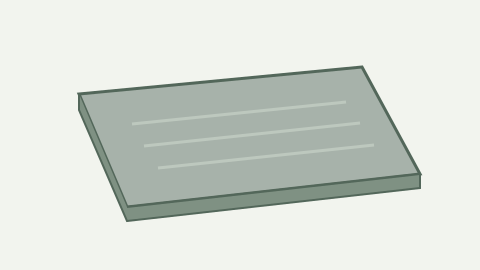
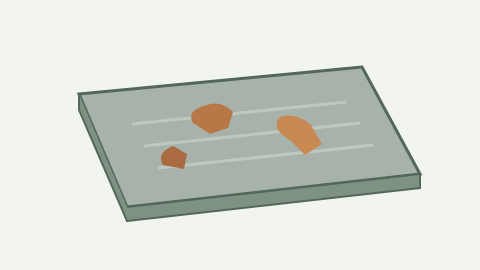
ASTM A967 copper sulphate test: visible deposition concept
Under applicable test conditions: no visible copper deposit
Under applicable test conditions: visible copper-coloured deposits
2. What Is ASTM A380?
ASTM A380/A380M is titled Standard Practice for Cleaning, Descaling, Pickling, and Passivation of Stainless Steel Parts, Equipment, and Systems.
It provides broader recommendations and precautions for surface cleaning, descaling, pickling and passivation.
The standard addresses surface conditions involving contaminant iron, oxide scale, oils, particles and other deposits.
It also discusses cleanliness assessment, prevention of recontamination and the different levels of cleanliness required for different applications.
ASTM A380 is a broad practical reference for stainless steel surface preparation and treatment rather than a specification limited to chemical passivation.
3. Key Differences Between ASTM A967 and ASTM A380
| Comparison | ASTM A967/A967M | ASTM A380/A380M |
|---|---|---|
| Document type | Standard Specification | Standard Practice |
| Main purpose | Chemical passivation and verification | Cleaning, descaling, pickling and passivation guidance |
| Scope | Stainless steel parts | Parts, assemblies, equipment and systems |
| Main emphasis | Passivation requirements and effectiveness | Surface contamination and treatment practices |
| Acceptance | Alternative tests and acceptance criteria | Cleanliness assessment and related verification guidance |
| Ra requirements | Not primarily an Ra specification | Not primarily an Ra specification |
ASTM A380 addresses broader surface preparation and treatment practices, whereas ASTM A967 focuses more specifically on chemical passivation and its verification.
The two standards can complement each other but are not interchangeable.
4. Why Are Cleaning and Passivation Important?
Stainless steel corrosion resistance is closely related to its protective chromium-rich passive film.
Under suitable conditions, this film forms on a clean stainless steel surface exposed to an oxygen-containing environment.
Contaminant iron, oxide scale and other residues may interfere with the desired surface condition and increase the risk of localised corrosion or product contamination.
A visually bright surface is not necessarily free from contamination.
Cleaning, pickling, passivation and surface roughness reduction are distinct technical concepts and should be specified separately.
Distinguishing contaminant iron rusting from substrate pitting
Oxidation of contaminant iron: surface rust is not substrate pitting

Local loss of protection: pitting may affect the substrate
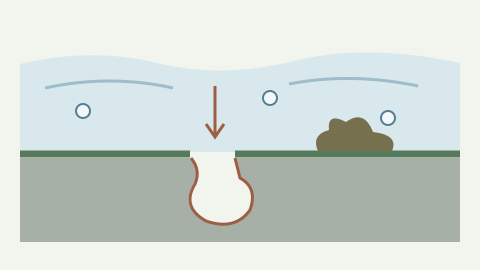
- Stainless steel substrate
- Chromium-rich passive film
- Contaminant iron / rust
- Oil / processing residues
- Moisture
- Chloride ions (open circles)
5. How Do These Standards Relate to Ra Surface Roughness?
Ra is a commonly used parameter describing the arithmetic mean of absolute surface profile height deviations.
Typical requirements may include Ra 0.8 μm, Ra 0.4 μm or Ra 0.2 μm.
ASTM A967 and ASTM A380 address stainless steel surface condition, but neither is primarily a specification for achieving a particular Ra value.
Meeting a chemical passivation requirement does not automatically establish compliance with a specified Ra.
Likewise, achieving a low Ra value does not by itself demonstrate compliance with ASTM A967.
Where both requirements apply, they should be specified and verified separately.
Relevant surface texture standards, such as the ISO 21920 series, may be used for appropriate roughness specifications.
6. Can Lower Surface Roughness Improve Corrosion Resistance?
Microscopic surface irregularities can create areas where moisture, contaminants and corrosive media may accumulate.
Reducing surface roughness can improve microscopic surface characteristics and reduce certain contamination-retaining features.
Under otherwise comparable conditions, a smoother stainless steel surface generally supports better cleanability and may improve corrosion performance.
Actual corrosion resistance also depends on alloy grade, surface contamination, passive condition and service environment.
Surface roughness measurements, cleanliness assessments and chemical passivation verification therefore serve different purposes.
7. How Does SMT Differ from ASTM A967 and ASTM A380?
Stainless Steel Micro Treatment (SMT) is the technology name used by KUN-QI for its specialist stainless steel surface treatment.
SMT focuses on refining microscopic surface characteristics and meeting customer-specified Ra requirements.
KUN-QI's SMT technology can achieve the customer-specified target Ra value or a lower surface roughness value.
SMT is applied to the entire component; selective treatment of designated local areas is not offered.
The distinction is:
| Item | Primary focus |
|---|---|
| SMT | KUN-QI microscopic stainless steel surface treatment and Ra control |
| ASTM A967 | Chemical passivation requirements and verification |
| ASTM A380 | Cleaning, descaling, pickling and passivation practices |
SMT is not a process defined by either ASTM standard. Achieving a specified Ra does not establish compliance with their requirements.
8. What Should Customers Specify?
Technical drawings and purchase specifications should identify:
- Stainless steel grade.
- Applicable ASTM standard and edition.
- Required cleaning or chemical passivation.
- Applicable tests and acceptance criteria.
- Separately specified Ra requirements.
- Component geometry and quantity.
- Service environment and corrosion requirements.
- Required inspection documentation.
Where roughness, cleanliness and passivation are all important, each should have its own clearly defined acceptance requirements.
9. Frequently Asked Questions
Are ASTM A967 and ASTM A380 interchangeable?
No. They have different purposes and scopes, although they may be used together.
Does ASTM A967 require the same passivation treatment for every stainless steel grade?
No. Different treatment alternatives are covered, and selection depends on the applicable requirements.
Is ASTM A380 the same as an ASTM A967 acceptance specification?
No. ASTM A380 provides broader practical guidance, while ASTM A967 specifically addresses chemical passivation treatments and verification.
Does lower Ra always guarantee better corrosion resistance?
No. A smoother surface may improve cleanability and corrosion performance, but alloy grade, contamination and passive condition also matter.
Is SMT equivalent to ASTM A967 passivation?
No. SMT is KUN-QI's stainless steel micro-surface treatment technology and must not be represented as an ASTM A967 chemical passivation process.
10. KUN-QI Professional Stainless Steel Surface Treatment
KUN-QI specialises in stainless steel surface treatment, with Stainless Steel Micro Treatment (SMT) as its core technology.
SMT focuses on refining microscopic surface condition, reducing roughness and supporting improved cleanability and corrosion performance.
For customer-supplied components, KUN-QI evaluates treatment requirements according to material, initial surface condition, target Ra, geometry and acceptance criteria.
Treatment conditions and processing times vary according to the individual component.
KUN-QI serves B2B customers requiring specialist surface treatment for single-piece prototypes, low-volume orders and varied technical requirements.
Customers may submit drawings, material information, Ra targets, quantities and relevant specifications to discuss SMT treatment suitability.
Official Technical References
- ASTM A967/A967M-25 — https://store.astm.org/a0967_a0967m-25.html
- ASTM A380/A380M-25 — https://store.astm.org/a0380_a0380m-25.html
Technical note: This article explains publicly available standards information and does not replace the official ASTM documents. KUN-QI provides passivation services to ASTM A967. SMT and ASTM A967 chemical passivation are distinct services; SMT is not claimed to be ASTM-certified or equivalent to chemical passivation.