
Contamination and residues
Oils, dust and acid, alkali or salt residues can promote corrosion under particular conditions. Rinsing and removal of residual treatment solutions are important parts of surface processing.
Scratches and carbon steel contamination
Scratches can disrupt the local protective film. Contact with carbon steel, shared tools and process residues can introduce iron contamination. Review handling and fabrication conditions alongside visible damage.
Cutting, heating and welding
Cutting slag, weld spatter, heat-affected zones and weld defects can affect local corrosion resistance. Assess material structure, surface condition and the corrosive environment together.
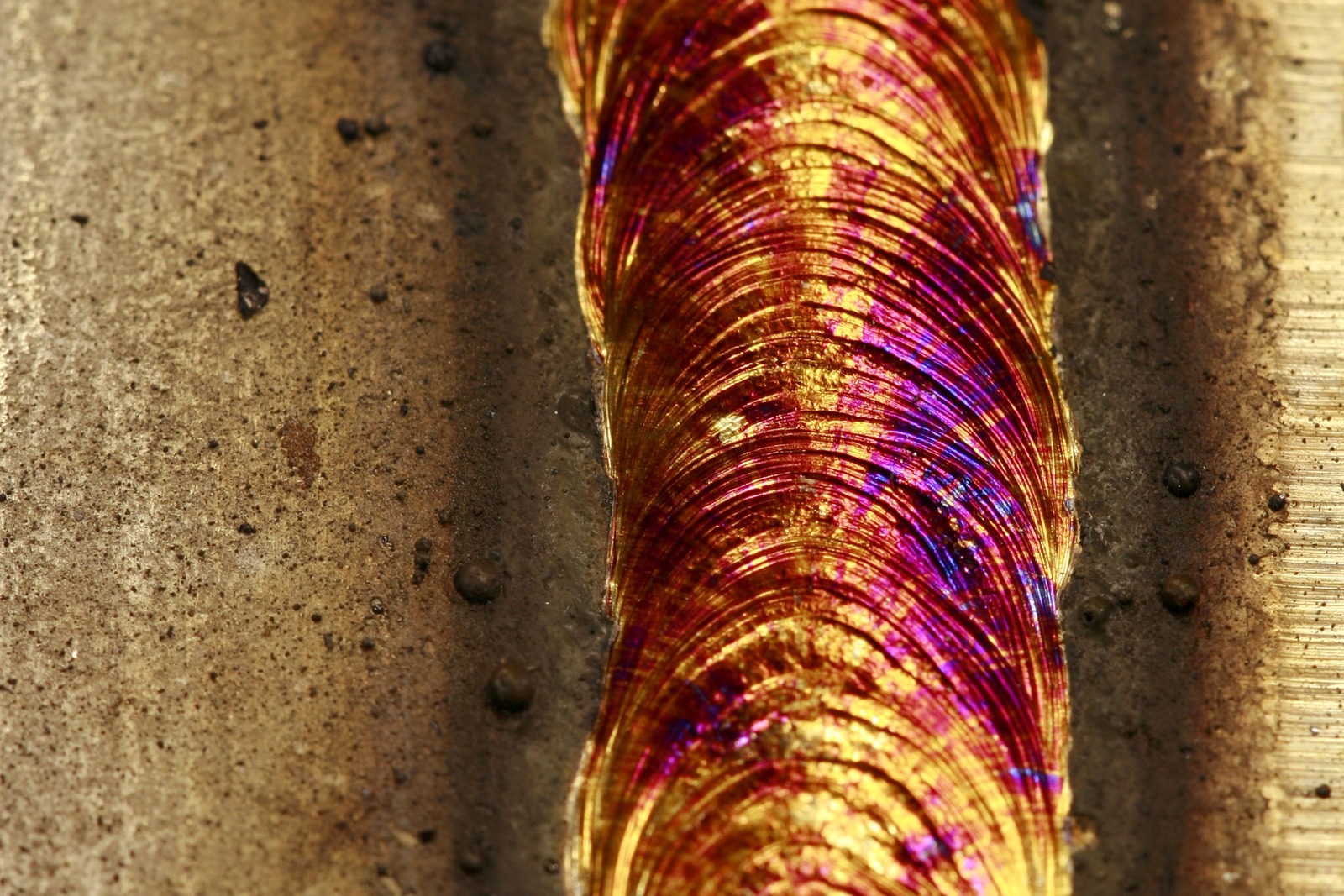
Weld appearance | AISI 316L stainless steel weld bead; not evidence of a corrosion mechanism.
Photograph of an AISI 316L stainless steel weld bead, showing weld morphology and the surrounding surface.
Tanel Eensoo · Wikimedia Commons ↗ · CC BY-SA 3.0External technical image, not a KUN-QI test. Proportionally resized; no cropping or colour changes.
Material and stress conditions
Variations in composition or structure, surface defects and stress concentrations are relevant when investigating corrosion. Determine the cause from the material and its service conditions.
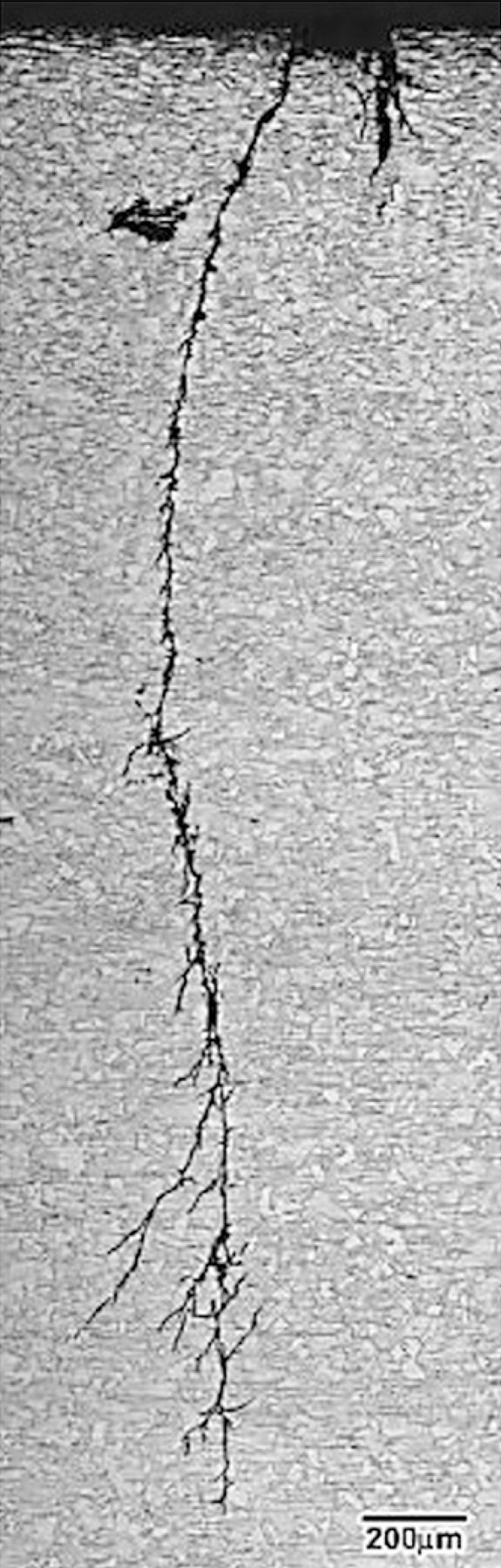
Stress corrosion cracking (SCC) | UNS S31603 stainless steel micrograph; original 200 μm scale bar retained.
Stress corrosion cracking in UNS S31603: the source study used a drop evaporation test at 110 °C for 500 h, synthetic seawater at pH 8.2 and a maximum tensile stress of 139 MPa. Original 200 μm scale retained.
Henrique Boschetti Pereira, Zehbour Panossian, Ilson Palmieri Baptista & Cesar Roberto de Farias Azevedo; Commons crop: Yapparina · Wikimedia Commons ↗ · CC BY 4.0External technical image, not a KUN-QI test. Proportionally resized; no cropping or colour changes.